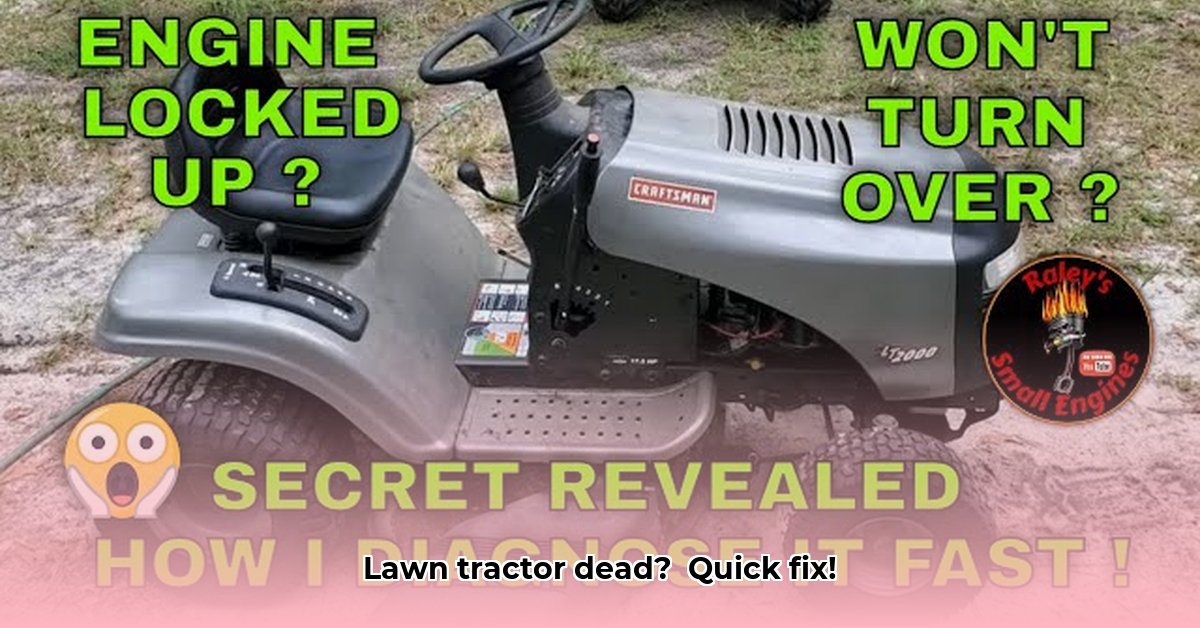
Your lawn tractor refusing to start? This comprehensive guide will help you troubleshoot the problem, from simple fixes to more involved repairs. We'll cover common issues like dead batteries, faulty connections, and problems with the ignition system, providing step-by-step instructions and visual aids along the way. Let's get your lawn tractor back in action! For more advanced repairs, like replacing drive belts, see this helpful guide: Drive Belt Replacement.
Lawn Tractor Won't Start: Initial Checks
Before delving into complex repairs, let's tackle the most common culprits:
1. Battery Voltage Check (The Usual Suspect)
A dead or weak battery is the most frequent cause of a non-starting lawn tractor. Use a multimeter (a device that measures voltage—available at most hardware stores) to check your battery's voltage. A fully charged 12-volt battery should read around 12.6-12.7 volts. Anything lower suggests a weak battery needing a charge or replacement.
- Action: Charge a low battery using a suitable charger. If charging doesn't resolve the issue, replace the battery.
2. Check Battery Terminals and Connections
Corrosion on battery terminals hinders power flow, even with a good battery. Clean terminals and connecting cables with a wire brush until they're shiny and free of corrosion. Securely tighten all connections.
- Action: Clean and tighten battery terminals and cables.
Beyond the Battery: Deeper Troubleshooting
If the battery and connections are fine, let's investigate the electrical system:
3. Inspecting the Wiring Harness (The Electrical Highway)
Your lawn tractor's electrical system is a network of wires. Inspect the wiring harness carefully for any damage: broken wires, frayed insulation, or corrosion. Repair or replace damaged wires, ensuring you match the gauge (thickness) of the replacement wire to the original. This requires electrical knowledge; if unsure, seek professional help.
- Action: Visually inspect the wiring harness for damage. Repair or replace as needed.
4. Testing the Starter Solenoid (The Engine's Go/No-Go Switch)
The starter solenoid acts as a switch, connecting the battery to the starter motor. A faulty solenoid prevents the starter motor from engaging. You can test this with a multimeter: measure voltage at the solenoid's terminals when attempting to start. No voltage indicates a problem – often requiring professional help. A clicking sound may specifically indicate a faulty solenoid.
- Action: Test the solenoid with a multimeter. If faulty, replace it (a relatively straightforward repair).
5. Starter Motor Inspection (The Engine's Cranking Heart)
If the solenoid is okay, the starter motor might be faulty. This is a more complex repair, best left to a professional unless you have mechanical experience. A clicking sound when you turn the key but no cranking often points to a starter motor issue.
- Action: If the starter motor is faulty, seek professional repair.
6. Checking the Ignition System (Where the Spark Happens)
A spark is necessary for ignition. Inspect your spark plugs; replace them if they are dirty or corroded. Carefully examine the spark plug wires for any damage. This part of the system often requires more specialized knowledge.
- Action: Check spark plugs and wires; replace as needed. If problems persist, seek professional help.
7. Investigating Safety Switches (Are They Blocking the Start?)
Many lawn tractors employ safety switches for operator protection. These include blade engagement, seat safety, and PTO (power take-off) switches. Ensure these are properly engaged and their connections secure. A single faulty switch can easily prevent the engine from starting.
- Action: Check and confirm all safety switches are properly engaged and wired.
Troubleshooting Chart: A Quick Reference
| Problem | Possible Causes | Recommended Action |
|---|---|---|
| Lawn Tractor Won't Turn Over | Dead battery, faulty connections, bad solenoid, starter motor, ignition issues, safety switches | Check battery, clean connections, inspect/replace components; check safety switches. |
| No Cranking | Dead battery, bad starter motor, faulty solenoid | Charge or replace battery; check/replace starter motor or solenoid. |
| Clicking Sound | Low battery voltage, faulty solenoid, bad starter motor | Charge battery, test/replace solenoid or starter motor. |
| No Spark | Faulty spark plugs, ignition coil, damaged wires | Replace spark plugs; check ignition coil and wires. |
| Engine Cranks But Doesn't Start | Fuel issues (empty tank, clogged fuel line) | Check fuel tank and lines. |
Safety First: Always disconnect the negative battery terminal before working on any electrical components. Wear safety glasses and gloves.
Regular maintenance is crucial! Preventative care will keep your lawn tractor running smoothly. Regularly checking your battery, connections, and ignition system will save you time and frustration in the long run.